"I know!"
"I've got an idea!"
"Teacher Tom, look at this!"
The soundtrack of a play-based preschool is punctuated by expressions of these "eureka moments." Sometimes the children run up to me in groups, grab my arms to pull me over to what they have collectively discovered or invented or understood, babbling their explanations and theories explaining with their hands and bodies as well as their words.
There is a myth embedded deeply in Western schooling that tells us that learning happens according to some sort of hierarchical progression, but that simply doesn't jibe with what we know about how humans, especially young humans, learn. If we are to really understand anything, we are best served by first experiencing it first-hand in a relaxed, exploratory, wholistic way, not as a series of discrete parts like the way we tend, for instance, to teach mathematics (first comes counting, then adding, then subtracting, then multiplying, etc.). When we break things apart like this, we remove the complex connectivity that stands at the center of life itself. We would never think to teach children about, say, soccer by first showing them a photograph of a ball. We all know, intuitively, that this removes the ball from the world of physics, sport, teamwork, and play, rendering it meaningless. No, first we play with the ball, according to our current abilities, in context. Only once the child has internalized this thing called a ball and its relationship to the rest of the world, can we expect a child to be inspired by soccer. The fact that we try to teach young children math through arithmetic and ciphering is why so few of us grow up to be inspired by math; indeed, a huge percentage of adults today report some level of math anxiety.
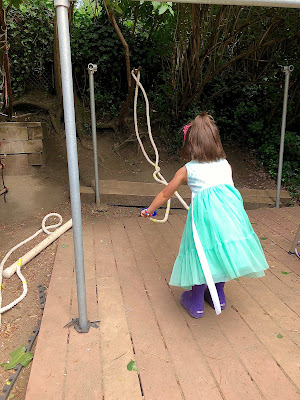
As the great educator Bev Bos recognized, "If it hasn't been in the hand and the body it can't be in the brain."
This misunderstanding of how humans learn, stands at the center of the Western approach going back at least to the ancient Greeks. It leads us to believe that inspiration has no place outside of the art studio.
As Aboriginal author and researcher Tyson Yunkaporta writes in his book Sand Talk:
"Inspiration is something that has been relegated to the arts rather than the sciences, although stories of 'eureka moments' in scientific discovery are still celebrated . . . But creativity is now widely regarded as a vaguely defined skill set falling randomly on individual geniuses. Deep engagement encompassing mind, body, heart, and spirit has been replaced by a dogged ethic of commitment to labor and enthusiastic compliance with discipline imposed by authority. While it may be proven that internal motivation is more productive than external pressure, the uncertain and unsettling sources of this inner power are threatening to hierarchies, so intrinsic control methods of organization are generally ignored in both education and the workplace. Or they are co-opted into "self-management" protocols that involve internalizing our administrators and doing the job of monitoring or managing for them -- an arrangement not unlike the child who always has the voice of an abusive parent in his head."

The boy who crawls around the playground in imitation of a spider; the girl concocting potions in an old coffee can; the children negotiating the rules of the game they are inventing -- this is what deep engagement encompassing mind, body, heart, and spirit looks like. Those eureka moments of "I know!" "I've got an idea!" "Look at this!" is how it sounds. We've all experienced those moments and know that feeling of inspiration, of learning, that emerge from our play, whatever our age. This is what lets us know that we truly understand.
Yes, it is uncertain and often unsettling. It can't be measured or standardized. Play takes control away from the institution and returns it to the head, hands, and heart of the learners, where it belongs. And that is why our system of schooling is so threatened by children at play.
******
Just two more sleeps . . . Let's make this year Our Year of Play! Early childhood educators, directors, homeschoolers, and parens of young children . . . please join me for this affirmative and informative live workshop. In the spirit of inclusiveness, I've kept the price as low as possible ($9), so share far and wide. This is a great way to get the whole team on the same page for the New Year. Certificates are available. A replay will also be available. For more information and to register, click here: Making 2026 Our Year of Play 


 Posts
Posts


No comments:
Post a Comment